
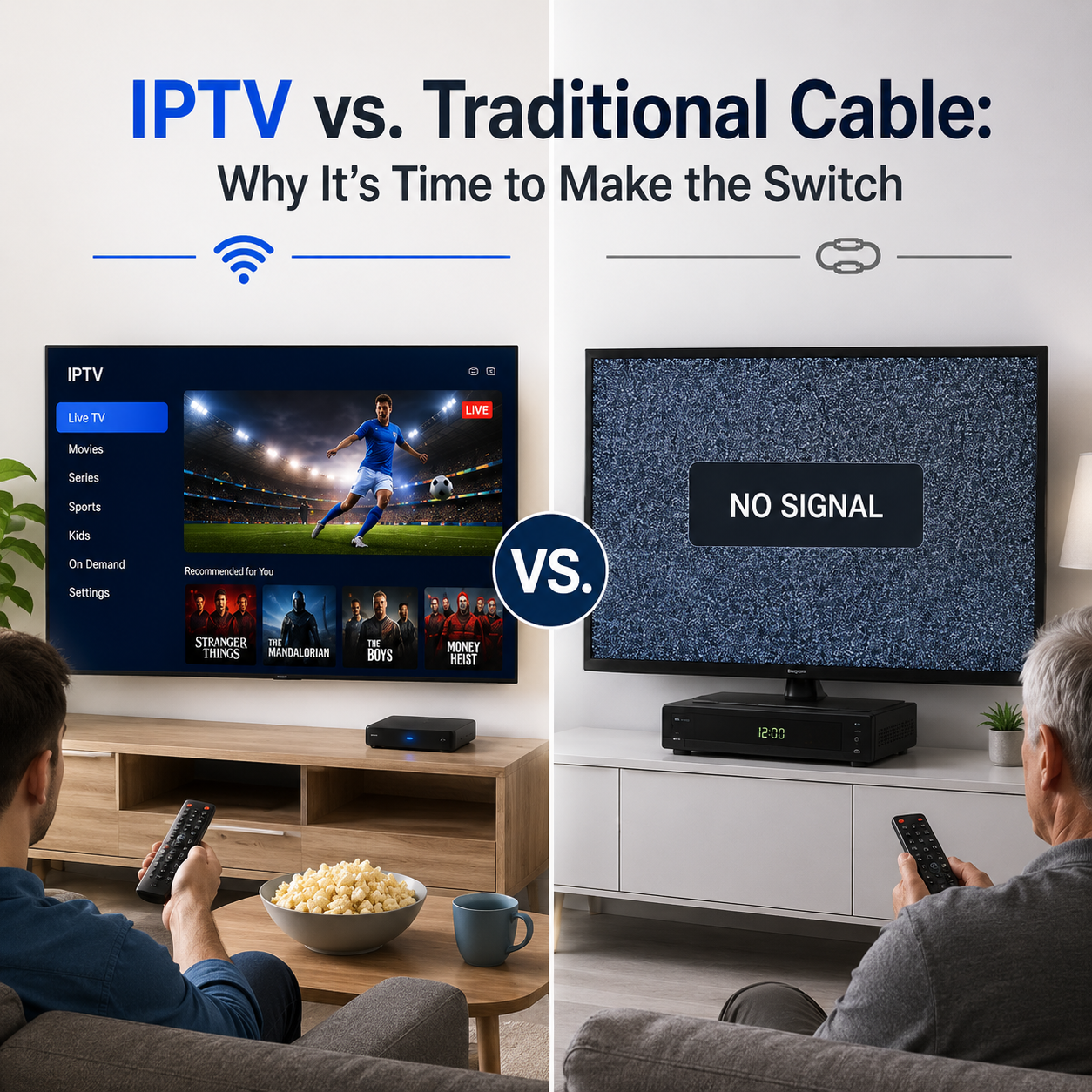
The Cord-Cutting Revolution
For decades, traditional cable and satellite TV dominated home entertainment. You paid a premium price, rented a clunky set-top box, and watched whatever the network decided to broadcast at that specific moment.
Today, the landscape has fundamentally shifted. Internet Protocol Television (IPTV) is rapidly replacing traditional cable. If you are still paying for a satellite dish, you are overpaying for outdated technology. Here is why it is time to make the switch.
What is Traditional Cable / DTH?
Direct-to-Home (DTH) satellite and traditional cable rely on analog or digital radio frequency signals transmitted through coaxial cables or bounced off satellites.
- The Problem: The signal is unidirectional. Broadcasters send the signal, and your TV receives it. You have zero control over the feed, and the infrastructure is highly susceptible to physical damage and weather.
What is IPTV?
IPTV delivers live television channels and video content through your high-speed internet connection rather than a satellite dish.
- The Advantage: It is interactive and bidirectional. Instead of receiving 500 channels simultaneously (which takes up massive bandwidth), IPTV only sends the specific channel you click on, right when you request it.
Head-to-Head: Why IPTV Wins
1. Weather Immunity
Every satellite TV owner knows the frustration of losing signal during heavy rain or wind. Because IPTV runs through underground fiber-optic broadband cables, it is completely immune to weather conditions. Your TV stays crystal clear during the worst storms.
2. Video on Demand (VOD) and Catch-Up TV
Traditional TV dictates your schedule. If you miss the 8:00 PM news, it is gone. IPTV includes Catch-Up features, allowing you to rewind live TV or watch broadcasts from the past 7 days. Furthermore, IPTV subscriptions usually include massive VOD libraries (movies and box sets) built directly into the interface.
3. Multi-Screen Viewing
Cable companies charge you extra for every "multi-room" set-top box you rent. IPTV is app-based. You can watch live sports on your smart TV in the living room, while your kids watch cartoons on a tablet, and your spouse watches a cooking channel on their smartphone  all under one subscription.
4. Cost Efficiency
Cable packages are bloated with hidden hardware rental fees, installation charges, and hundreds of channels you never watch. Bundling your IPTV service directly with your DreamFiber broadband plan provides a single, unified bill that is drastically cheaper than paying a separate DTH provider.
Conclusion: Upgrade Your Viewing Experience
Traditional cable is a thing of the past. IPTV offers flexibility, better pricing, and superior technology. If you are ready to cut the cord, explore the DreamFiber Broadband + IPTV bundles today and take control of your living room.